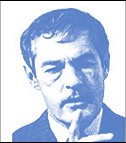
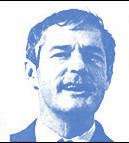
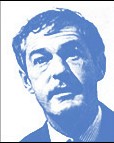
Two responses to the recent wave of sleaze against the late Timothy LearyRobert Greenfield’s recently published biography of Tim Leary — a sensationalist hatchet job of character assassination — has resulted in a slew of mainstream media review articles which basically echo Greenfield’s cynical, so-superior, moralistic put-down. Apparently, Leary’s message was so threatening, that even 10 years after his death, mainstream media still find ways to negate it. In an ironic development that Leary would have found uproariously funny, a second biography, by English writer John Higgs, also appeared this year — a very different and admirably balanced portrayal. Below are two responses to the wave of sleaze against a man of whom Hunter S. Thompson said: “Tim was a chieftain. He stomped on the terra, and he left his elegant hoof-prints on all our lives.”
One is a letter by me to The Nation, in response to a review by Neal Pollack of Greenfield’s book. (I don’t know yet if they’ll publish it)
The other is an e-mail interview by Paul Krassner, with John Higgs; sent to me by Paul.
Subject: Neal Pollack on Greenfield on Leary (Aug 14/21)
Neal Pollack’s review inanely parrots the hatchet-job that Robert Greenfield has penned as a supposedly “comprehensive biography” of Timothy Leary. Apparently main-stream publishers and national magazines still can’t resist the temptation to pontificate in moral judgment over a generation of seekers who were turned on by the creative possibilities of consciousness expansion, and turned off by their culture’s addictions to consumerism and militarism. (Pollack approvingly quotes Greenfield’s condescending dismissal of the sixties counterculture as “a freaky mirror image of mainstream celebrity-obsessed America”.) Pollack thinks Greenfield’s book is “an epically thrilling, wicked epitaph for the vain, bizarre, self-promoting guru”. But you have to wonder, why spend 600 pages on a sustained job of character assassination of a man who’s been dead for almost ten years and presumably no longer a threat to anyone? Greenfield has zero understanding nor, apparently, real interest in the potentials of psychedelics, nor of Leary’s bold and irreverent attempts to explore these potentials. As a close collaborator of Leary and Alpert, both at Harvard and Millbrook, and a life-long friend of both men, my regret at having nai"vely agreed to talk with Greenfield is only tempered by the realization that he would have written his hit-piece anyway. Of course Leary had his faults, like any man. One thing I do know is that he also had the capacity to laugh at himself and his failings, to treat everyone he encountered with total respect and generosity, and without malice. At a time when university research projects are starting to replicate studies that our Harvard project published over 40 years ago, those who would like a deeper understanding of the man and his visionary work should read the eminently fair and balanced biography, only published in the UK so far, by John Higgs, -- I Have America Surrounded.
Ralph Metzner, Ph.D.
Professor Emeritus, California Institute of Integral Studies
Co-author, The Psychedelic Experience.
The Legacy of Timothy Leary
by Paul Krassner“There is one thing people should know about Tim Leary,” says British writer John Higgs. “He was fucking funny!” Shortly before his death, Leary was asked about Richard Nixon calling him “the most dangerous man in America.” “It’s true,” Leary replied. “I have America surrounded.” Which is why Higgs titled his biography I Have America Surrounded: The Life of Timothy Leary. I asked him a couple of questions via e-mail.
Q. How do you view the negative media depictions of Leary this year?
A. I find them very revealing. Not in what they're saying, of course, but in what they are ignoring. Most of the mud that has been slung at Leary is perfectly true, but you can be factually accurate and wildly misleading at the same time. For instance, if someone asked me to describe Winston Churchill, I could say he was a mentally ill drunk who lost the 1945 UK General Election. And I'd be factually correct, but that wouldn't mean I was being fair, or that I'd nailed the essence of the man. With Leary, for everyone with a complaint against him, there are countless people who credit him with enriching their lives on a very profound level, and I don't understand the desire to ignore this.
Ultimately, you can't hope to understand why he did what he did if you refuse to look at the ideas that drove him. Leary was too complicated a figure to dismiss as either a saint or a moron, as many people try to. He's probably the best example of the “trickster” archetype that the 20th Century produced, and his ambiguity is key to understanding him. The crux of his philosophy was the extent to which the reality that appears to be external to us is actually a model constructed by our own minds, a model that we are responsible for and which in certain circumstances can change. This is a frightening and unsettling idea, but it is also liberating. The implication is that if you hear someone describe Leary as a saint or as a moron, then they are not really telling you anything about Tim, but revealing something about themselves. Leary used to say, “You get the Timothy Leary you deserve.” (He was being willfully antagonistic here, I think. It would perhaps be fairer to say that you get the Timothy Leary you want.) The upshot of all this, of course, is that it is only right and fitting that we hear so many wildly different opinions about him. Perversely, it validates his ideas.
Q. How do you think history will remember him?
A. With increasing interest. We all know that Leary was instrumental in millions of people deciding to take LSD in the ’60s and ’70s. The big question, however, is how deeply did the impact on this affect our current, 21st Century western culture? It's a huge question, and one we've hardly begun to answer. A lot has been written about the impact of psychedelics on music, for example, but very little on its impact on the rest of our society, on subjects as diverse as chaos mathematics, religion, molecular biology, postmodernism or politics. All these are big subjects that will need a lot of work to understand.
Happily, people are now starting to look at these questions. John Markoff's recent book, What the Dormouse Said, which looks at the impact of ’60s thought on the emergence of the PC industry, is a good example of this. As the years pass, I think we're going to slowly get a better perspective on the impact of this historically unprecedented mass psychedelic use, and with that a better appreciation of Leary's impact on us all. William Burroughs said that Leary's impact would not be fully understood for a hundred years. I can't bring myself to disagree with this, but it is no reason not to venture a few steps further down that road now.